Understand the regulations, operate correctly, land safely.

Certificate of Drone Pilot Training
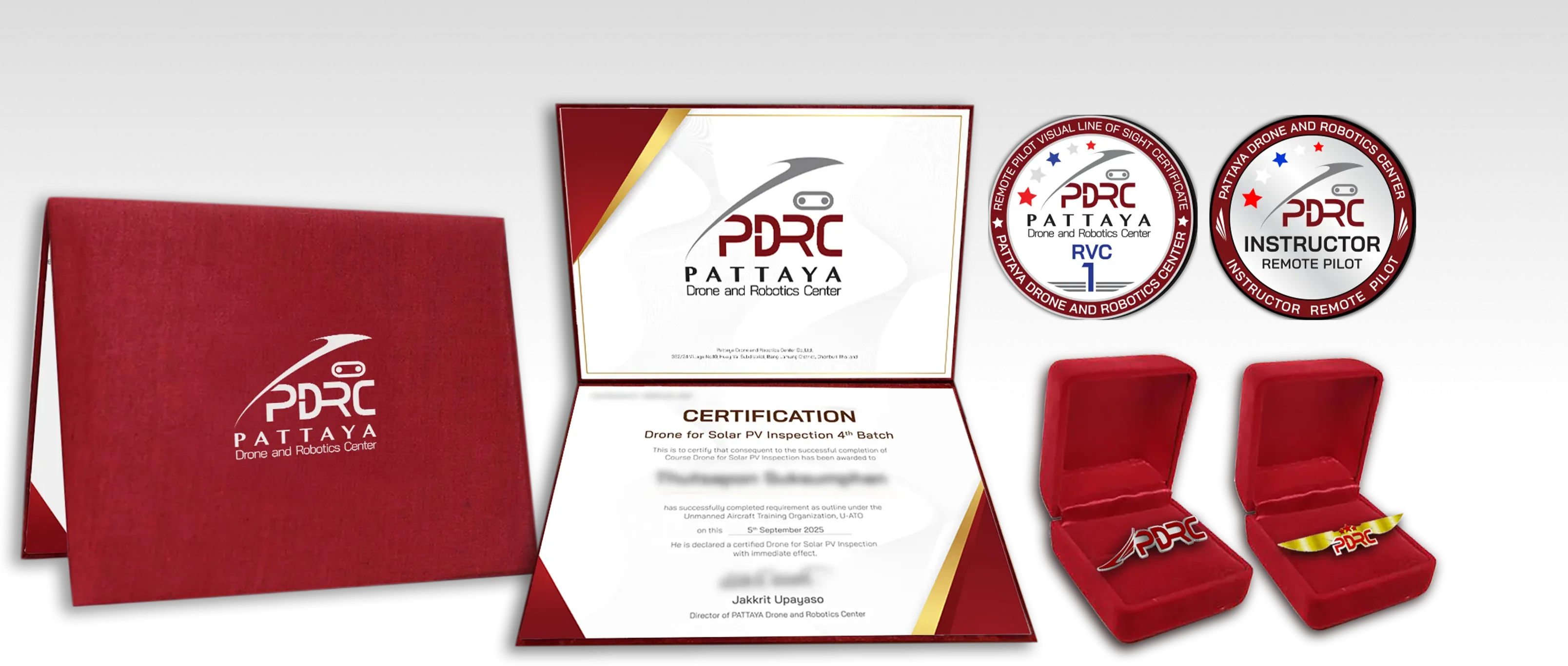
Our drone training center and drone service operations are conducted in accordance with both nationally and internationally recognized standards. We place the highest priority on safety, regulatory compliance, and the quality of our training programs and services.
All drone training courses and operational procedures are carefully designed to align with the requirements of the Civil Aviation Authority of Thailand (CAAT), as well as international standards such as NFPA 2400 and ISO 29993.
This ensures that all trainees and clients can be confident in receiving high-quality, transparent, and professionally applicable services.

The certificate awarded to trainees is compliant with drone aviation regulations.

1. Certificate of Completion (Issued by PDRC)
This certificate is awarded to participants who have successfully attended and completed the training program in full accordance with the specified requirements and duration.
The certificate includes the following details:
• Participant’s full name
• Course title
• Training duration
• Authorized signature from the institution
This certificate serves as official proof that the participant has successfully completed the training in accordance with established standards.

2. Competency Certificate
(e.g., issued by the Professional Qualification Institute (Public Organization) and the Ministry of Education)
This certificate is awarded to participants who have successfully passed both theoretical and practical assessments.
• Demonstrates the ability to operate drones safely and professionally
• May indicate competency levels (Basic / Intermediate / Advanced)

3. CAAT Remote Pilot License
(Issued by the Civil Aviation Authority of Thailand – CAAT)
For training programs conducted under the supervision and requirements of the Civil Aviation Authority of Thailand (CAAT), participants who successfully complete the course will receive certification that can be used to support applications for flight authorization and remote pilot registration.
This certification ensures compliance with national aviation regulations and enhances credibility for professional drone operations.

4. Accredited Certificates from Partner Institutions
• DJI Academy Certificate:
Issued for training programs conducted under the authorization of a DJI Academy Training Center.
• International Standard Certificates (e.g., ISO, NFPA):
Applicable to specialized courses such as Safety, Emergency Response Planning (ERP), Search & Rescue, and Thermal Inspection. These certifications enhance credibility and can be used as internationally recognized references.

5. Certificate of Attendance
This certificate is issued to participants who attend seminars or short-term workshops.
• Confirms participation without formal assessment
• Suitable for use as part of a personal development record (Training Record)
Drone Pilot Training Process for License Application
Prepare and obtain your drone pilot license legally and professionally
1. Registration
• Select a suitable course (Basic, Intermediate, Advanced, or Specialized)
• Complete the application form / provide personal information
• Confirm enrollment and complete the registration payment
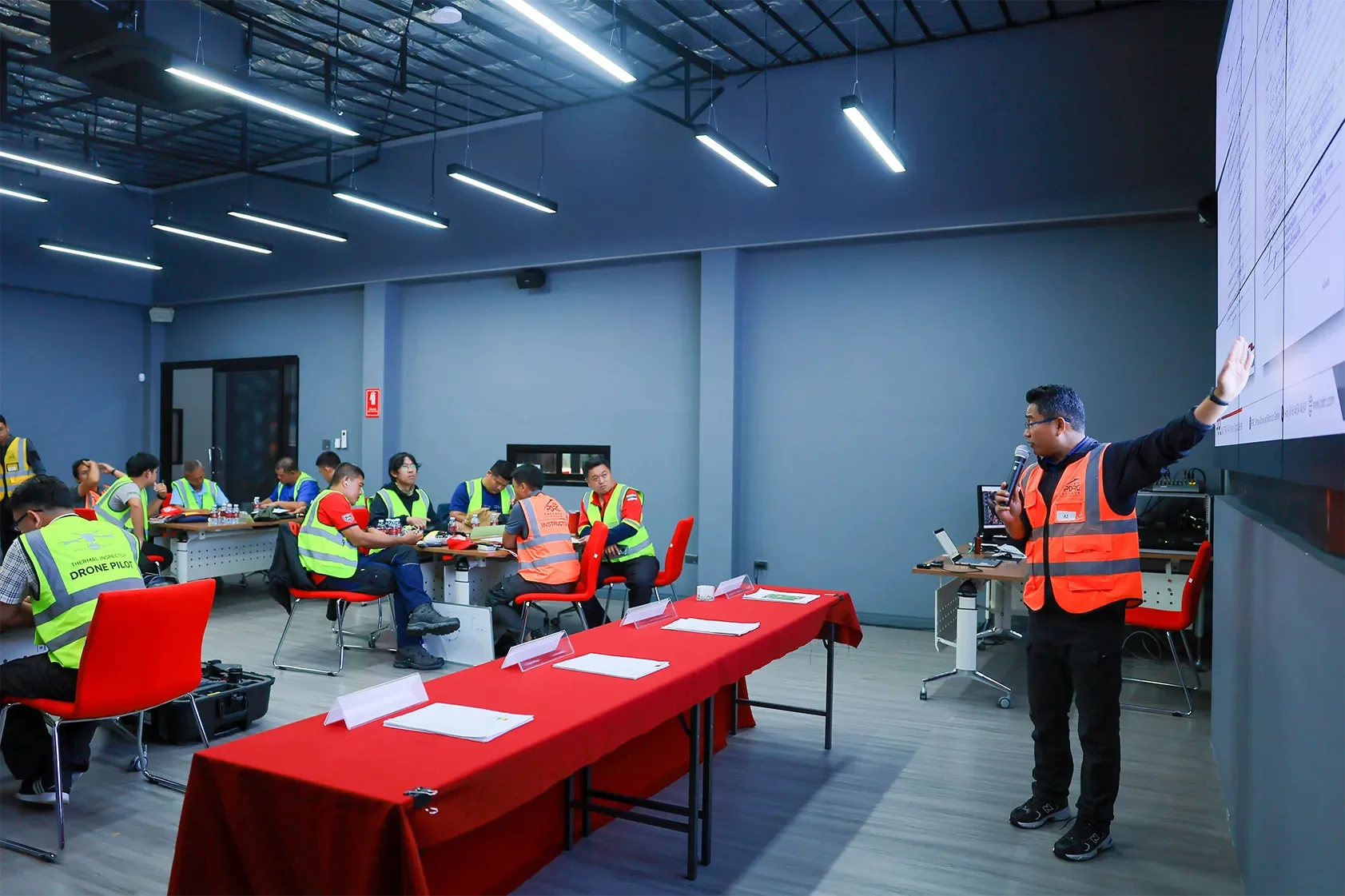
2. Theory Training
• Unmanned Aircraft Regulations (Drone Laws)
• Airspace Classification
• Maps and Navigation
• General Knowledge of Unmanned Aircraft Systems (UAS)
• Aviation Meteorology
• Human Performance and Limitations
• Flight Safety and Operational Procedures, including regulatory compliance, pre-flight and post-flight procedures, normal operations, and emergency procedures

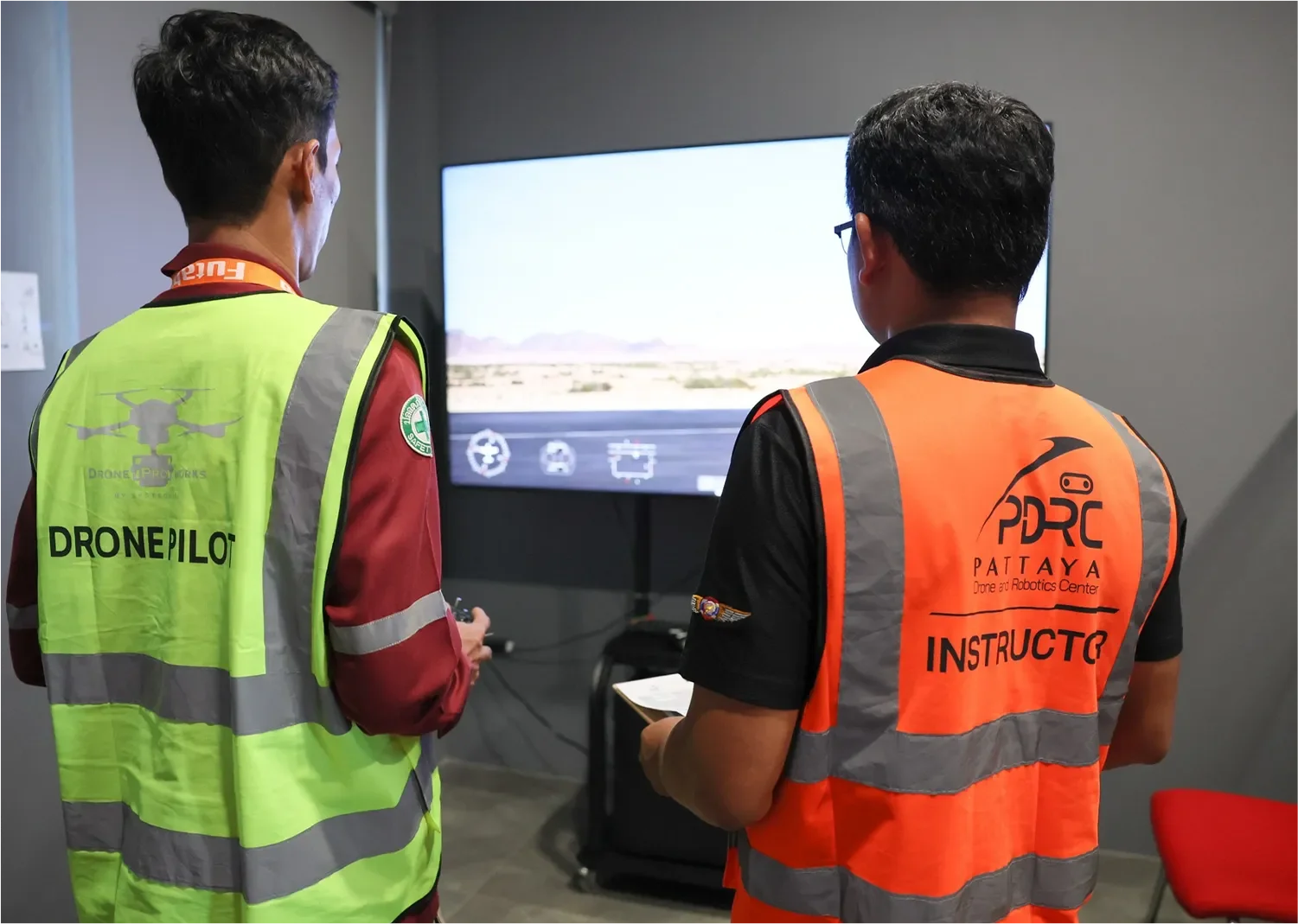
3. Flight Simulator Training
Flight Simulator Training is a crucial part of the pilot training program, allowing trainees to develop their flying skills safely in a realistic virtual environment before progressing to actual flight operations.
• Develops aircraft control skills, including basic flight maneuvers such as takeoff, landing, hovering, turning, and flying under various conditions
• Prepares trainees for real flight operations by reducing errors and risks during field training
• Enhances decision-making skills through simulated real-world scenarios, including high-pressure situations such as night operations and flying in confined areas
4. Practical Training
• Develop fundamental flight control skills, covering UAS control, flight maneuvers, and circuit patterns, including takeoff, landing, hovering, circular flight, and route-based navigation
• Practice specialized missions such as aerial photography, mapping, night operations, and thermal inspection
• Conduct hands-on training in real flight environments under the supervision of certified instructors
• Learn how to handle and respond to in-flight emergency situations
• Practice emergency procedures, including equipment malfunction, GPS signal loss, and sudden weather changes

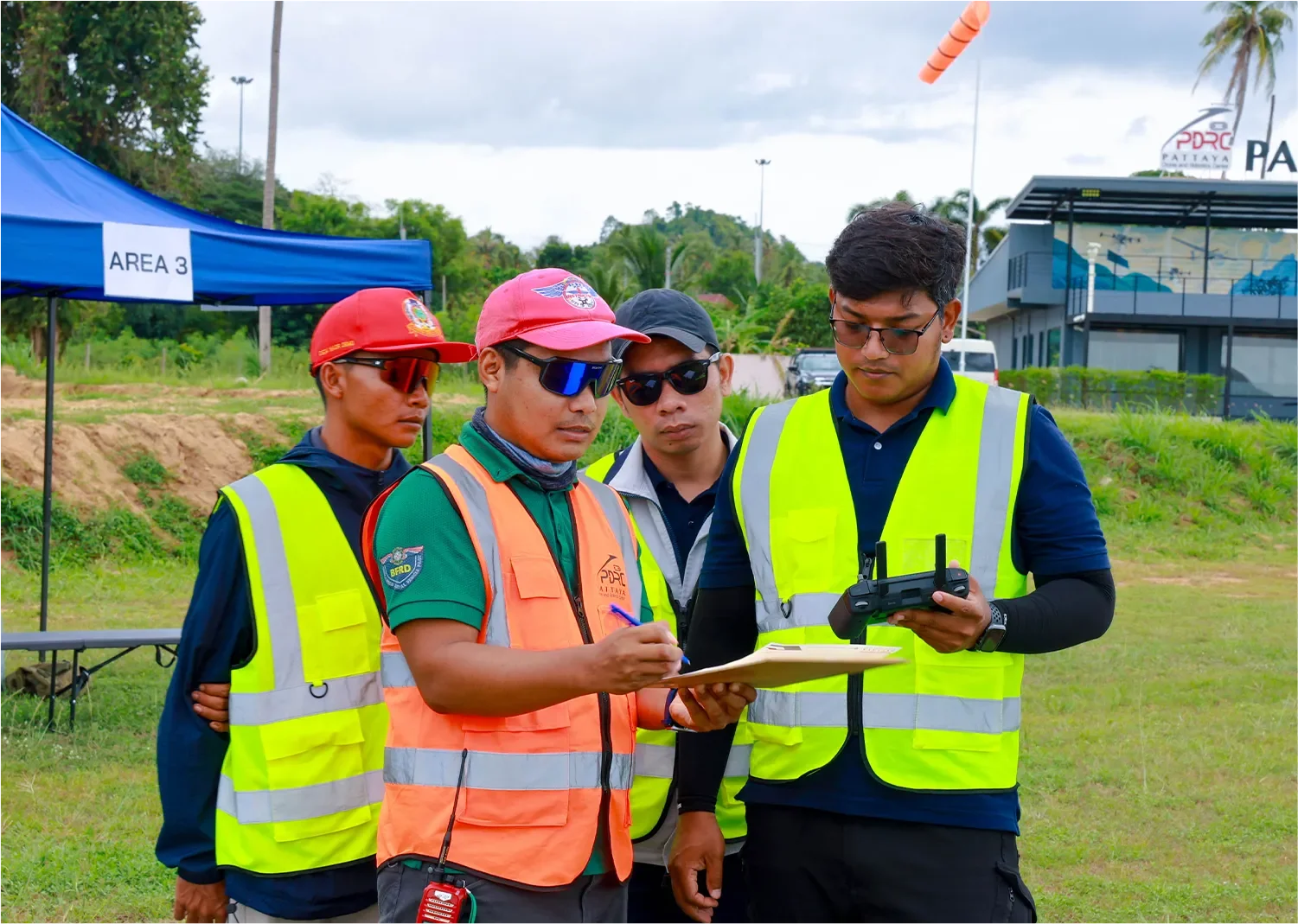
5. Examination
Written Test (Theory Assessment)
• Multiple-choice and/or essay-based questions
• Focus on knowledge of regulations, safety, and flight theory
Flight Test (Practical Assessment)
• Participants are required to demonstrate drone operation based on assigned missions
• Evaluation of flight skills, decision-making, and problem-solving abilities
• Instructors assess performance based on standardized criteria such as safety, accuracy, and procedural compliance
6. Certification
• Participants who successfully pass both the theoretical and practical examinations will be awarded a Certificate of Competency and/or Certificate of Completion
• For programs aligned with CAAT, DJI Academy, or international standards, participants may receive additional certifications from relevant authorities, which can be used to support remote pilot registration and ensure legal compliance with CAAT regulations
• Participants who do not pass the examination may apply for re-assessment in accordance with the training center’s policies


7. Follow-up & Support
• Participants will receive training manuals and supporting materials
• Access to a trainee community group for knowledge sharing and experience exchange
• Post-training consultation services to support real-world operational applications
Benefits of Having a Drone Pilot Training Certificate
- Yes, once you understand the regulations and pass the assessment, you may start working in areas such as:
• Aerial photography
• Surveying and mapping
• Solar panel inspection
• Search and rescue operations
- No license is required before enrollment.
During the course, we will teach you:
• Aviation regulations
• Drone registration procedures
• Licensing requirements under Civil Aviation Authority of Thailand (CAAT)
- Yes.
Students who successfully complete the training will receive a Certificate of Completion, which may support job applications or professional service work.
The professional course covers the following topics:
• Pricing strategies for drone services
• Cost estimation and budgeting
• Preparing professional quotations
• Risk management for operations
 MakeWebEasy
- Home Home
- Virtual Tour 360° Virtual Tour 360°
- About Us About Us
- Training Programs Training Programs
- Products Products
- Albums Albums
- News/Events/Articles News/Events/Articles
- Contact Us Contact Us